SMEs will sometimes tell you that the information is the only thing that matters; spell checking and copyediting are unnecessary frills.
Not that we had any doubts about this, but I recently stumbled across a study done at Clemson University that demonstrates that correct information is regarded as less authoritative if poorly written:
When I announced the start of the STC certification program at the Summit in Dallas last month, I used images of a marathon on my slides, in part because the Boston Marathon was held only a couple of weeks before, but also because of the long path we followed. Believe it or not, certification was first discussed at the STC Annual Conference in San Diego in 1964! The first Ad Hoc Committee on Certification was established in 1975. Since then we’ve had four membership surveys, two RFPs, and one previous business plan (1984) that was tabled by the Board. More recently, an active Certification Task Force, chaired by Jon Baker, worked for several more years before we broke through. So, what took so long? With the dust settling, I’m getting a clearer picture.Continue reading “Certification: What took so long?”
As you’ve heard by now, at the STC Summit on April 30 the Board of Directors approved a business plan to begin a certification program for technical communicators. While this was the culmination of my three years as chairman of the Certification Task Force, it also represented the completion of a task that was first discussed at the Annual Conference in 1964 and first taken up by STC committees in 1975. A lot of people worked for a very long time on this!Continue reading “At long last: certification!”
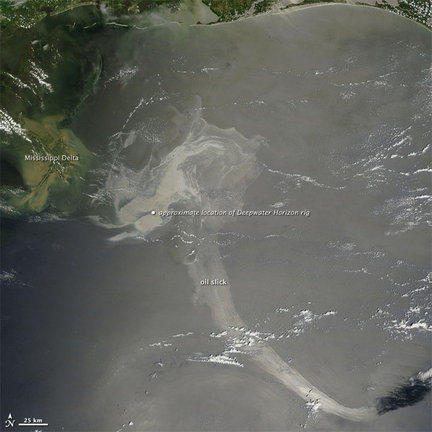
The oil spill in the Gulf of Mexico has been an ongoing ecological disaster. In analyzing what went wrong, there were obviously problems far and wide. But one of them seems to have been outdated and inaccurate technical documentation. Continue reading “The risk of out-of-date technical information”
Tomorrow I leave for the STC Annual Summit in Dallas, Texas and my last meeting as a Director at Large. I am finishing my term and rolling off the Board after Monday’s annual business meeting. It will be a little strange not being tremendously busy at the conference this time. (For the record, the Society stops paying my bills at that point.)
I will be presenting the Certification Task Force’s status in the getaway slot on Wednesday. Will the subject draw anyone? Can I keep their attention if it does? You’ll just have to come and find out 8^)
Rachel Houghton will do a fine job as Secretary. As for me, I don’t know yet what I will be doing after the Summit, but I expect to continue being an active member of STC. As I said on STC’s Notebook blog, I’m not going anywhere!
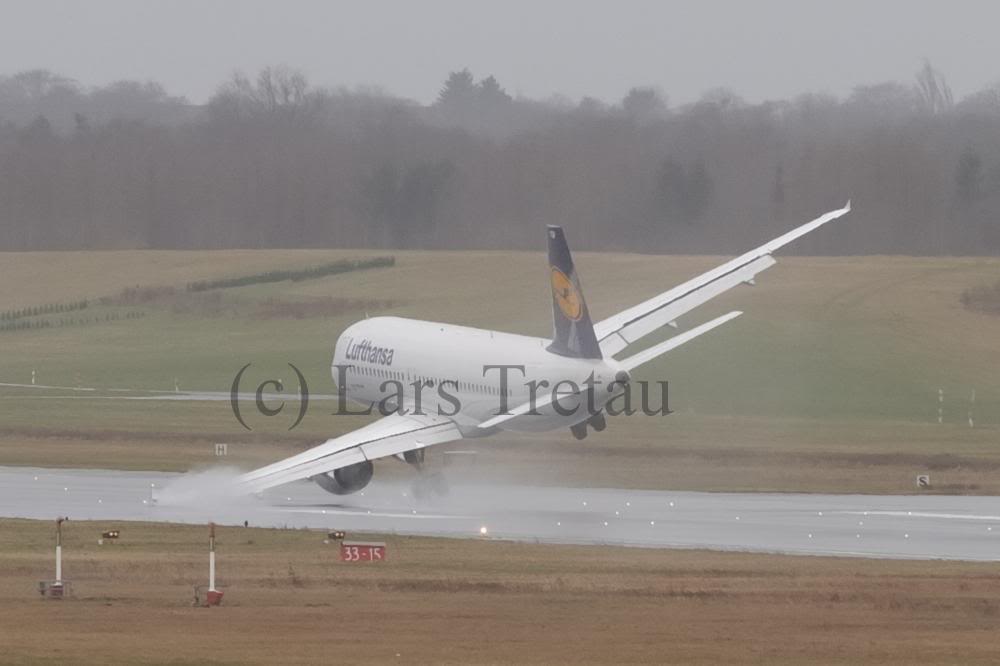
The amateur video is terrifying: a Lufthansa Airbus 320 carrying 132 passengers attempts to land at Hamburg Airport during a storm. Powerful crosswinds force the plane to fly crabwise. As it straightens out just above the runway, the left wing dips sharply and hits the ground:
A Lufthansa flight nearly crashes while landing in Hamburg during a storm
Fortunately, the pilots gunned the engines, got the plane back into the air, and landed on another runway. But the March 1, 2008 incident could easily have become a tragic accident.
Were the pilots at fault? Was the air traffic controller wrong to have cleared the plane for landing in such high winds? No. The review by Germany’s Federal Bureau of Aircraft Accident Investigation (BFU) came to a surprising conclusion. As reported by the German magazine Der Spiegel, a significant factor was… inadequate pilot manuals.
The Airbus aircraft demonstrated a behavior that had not been clearly described in standard documentation. Airbus, in other words, had left pilots unclear about how the aircraft might respond in this particular situation.
The cause of the incident was a quirk in the Airbus A320’s flight computer. On the first near-landing, it switched to ground mode — which, among other things, limits the power of the ailerons and restricts the pilots’ power to move them. They had to look on powerlessly as the flight computer took control and put the plane at the mercy of the storm…. Only when the pilot started to ascend again did the flight computer return to flight mode and free the aileron.
During the final approach, the tower reported winds gusting at up to 47 knots. The gusts were stronger than the prescribed limit for an A320 — the so-called “maximum crosswind demonstrated for landing.” Taking off again would have been appropriate. But the instructions provided in the manuals offered conflicting information, according to the agency. “We asked 80 pilots how they would have interpreted the instructions,” [chief investigator] Reuss said. “In fact, there were many different interpretations.”
In its report, BFU describes an “insufficient definition and explanation in the flight operations and technical documentation for the operation of the aircraft.” … BFU has ordered the Toulouse, France-based aircraft company to revise its flight documentation to include descriptions that are “uniform, clear and understandable without any contradictions.”
You can say that technical communication helps to ensure the health and safety of users, consumers, and the general public. You can say that technical communicators help reduce risk and liability. Both statements are true. Few examples are more vivid than this one.
You can read the full BFU report here. Thanks to W.C. Wiese for bringing this article to my attention.
STC has the biggest membership “tent” of any association of technical communicators, both by size and variety. But we’re by no means the only show in town. There are associations of medical writers, FrameMaker users, proposal writers, marketing writers, editors, and more. What, if anything, is the common thread that binds us together, and is it stronger than the attractions of other organizations? Continue reading “Can we fill in the blank? “All technical communicators _______””
 Steven Jong